

Since his feature debut with 1996’s Bottle Rocket, Wes Anderson has been considered one the most distinctive and vivacious cinematic voices of his generation. In the last decade, the American director has seen ascendancy to almost saintly appreciation by cinephiles, not least after the release of 2014’s The Grand Budapest Hotel, which saw an outstanding nine Academy Award nominations. Anderson most recent live-action films (The French Dispatch and Asteroid City) attempted to recapture the magic of the ‘Budapest Hotel’ but faced criticism for being too egregious, and in the words of film critic Bob Grimm, were ‘a self-parody of [Anderson’s] more successful films’. Anderson's latest offerings, via way of streaming titan Netflix, seemingly combat this criticism by stripping back the frill and excess of his previous pictures and producing four short, sweet, succinct pictures which accentuate the director’s signature style.
Anderson is stripping back the frill and excess of his previous pictures, accentuating his signature style
The crown jewel of this cinematic cavalcade is The Wonderful Story of Henry Sugar, a sprawling, layered epic which snugly fits into a 40-minute runtime. The ‘wonderful story’ in question is a globe-trotting epic in which a wealthy bachelor gains clairvoyance and uses this gift to cheat at gambling. Over the course of this tale, the audience is taken from London to Calcutta to Las Vegas, however, the film’s unique use of a limited stage set, complete with the occasional appearance of stagehands, imbues the movie with the feel of an arthouse theatrical performance. This method is utilised in all these shorts, and though limiting the characteristic worldbuilding of his motion pictures, this constraint allows Anderson to get the very best out of his impressive troupe of actors. The performances from acting heavyweights Benedict Cumberbatch, Dev Patel and Sir Ben Kingsley highlight exactly why they all currently reside in the pantheon of great British actors, however for me, the show is somewhat stolen by comedian (and acclaimed film director) Richard Ayoade, whose distinctive brand of comedic timing is a match made in heaven with Anderson’s already established style.
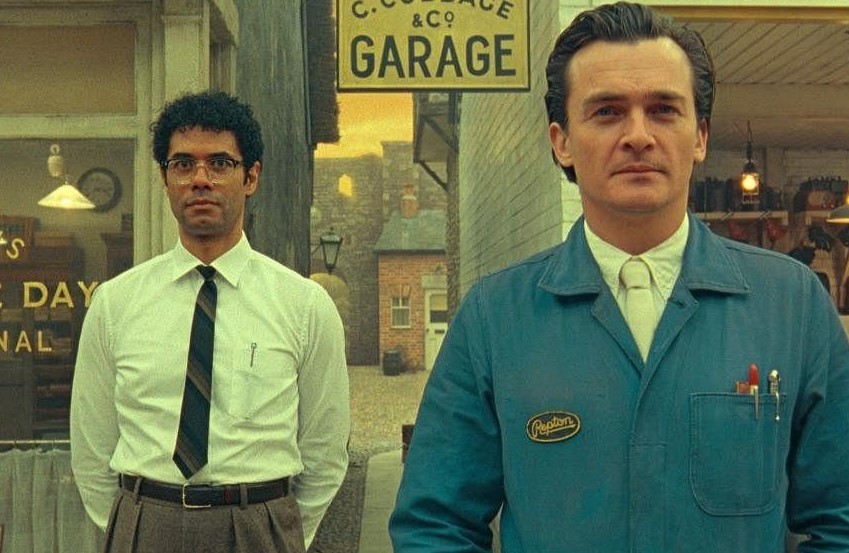
Ayoade’s hilarious delivery of lines again features in The Ratcatcher, a 15-minute tale about a specialist called in to deal with a rodent infestation. Whilst Ayoade shines, the real tour-de-force acting comes from Wes Anderson regular, Ralph Fiennes, who unnervingly morphs into the off-putting eponymous character of this tale (presenting a stark contrast in his performance to his cameo role as Roald Dahl in the other three shorts). The Ratcatcher is perhaps the most experimental of the short films with Anderson returning to stop-motion, a medium in which he had previously collaborated with Dahl to great acclaim with 2009’s Fantastic Mr Fox.
These adaptations are the perfect medium to experience one of the greatest directors of our time
For me, Poison is the most disappointing film of the collection. Whilst boasting the stellar trio of Cumberbatch, Patel and Kingsley, this short falls short mainly due to the lacklustre source material it was adapted from. The same cannot be said for The Swan, which in my opinion, was the highlight of the sub-twenty-minute trilogy, not only because of its superior story, but primarily due to a phenomenal performance from Rupert Friend. Whilst present in The Ratcatcher, Friend takes centre stage (literally, due to the theatrical set) as the sole character in this engaging tale, and whose performance can be described as the most intense one-man show ever committed to celluloid.
Returning back to Ben Grimm’s ‘self-parody’ critique of Anderson’s previous pictures, I too agree that due to his rich narrative and visual style, his films can stray into the realm of being overblown and overbaked. However, with the restrictions that Anderson set himself for this Roald Dahl Story Collection, I truly believe that these short film adaptations of one of the world’s most beloved storytellers are the perfect medium to experience one of the greatest directors of our time.