

Thirteen year old schoolboy Jamie Miller (outstanding newcomer Owen Cooper) has been arrested for the murder of his classmate Katie Leonard. She was stabbed seven times in a car park late at night. Four episodes catalogue the aftermath of this event, each one focusing on a different sector - in the police station, in the school, in the centre where Jamie is held, and finally, in Jamie’s family home.
This isn’t your typical whodunnit rather, a whydunnit. CCTV footage in the first episode reveals Jamie’s guilt - so what do the further three episodes achieve?
Though Katie is the victim, she is resoundingly silent. The focus instead placed on Jamie and finding out what drove him to commit such a crime. They want to “understand his understanding” of the situation, because the understanding of a child is not the same as an adult's.
Jamie desperately wanted to be liked. But this isn’t a sob story, rather a caution against what our new world is teaching our young men.
Jamie likes history in school because of the stories, marshmallows in hot chocolate as a treat, and wets himself in fear when the police come storming into his home.
“He’s thirteen years of age,” is the shield used by his father, Eddie (Stephen Graham) against everything the boy’s accused of, and something that the supporting police staff unconsciously mirror. Jamie is called “son” and “my love” perhaps more times than there are official questions asked of him.
And who can blame them? Particularly in the beginning of Episode 3, Jamie’s friendly, charming, and throughout Episode 1 the boy is heralded for being smart. It starts to feel as though maybe the authorities have got this all horribly wrong, even though we’ve seen the footage. And in an adult male, would these characteristics not count against him and convince us of his guilt?
That is until a particularly brilliant moment of explosion between Jamie and psychologist Briony Ariston (Erin Doherty). Hired by Jamie’s defence team to gain an “understanding of his understanding” of the events, the two perform a verbal tennis match, back and forth. Jamie continually tries to gain the upperhand through putting on various masks until, like any child, he just can’t cope when he realises that he doesn’t hold the power in the room.
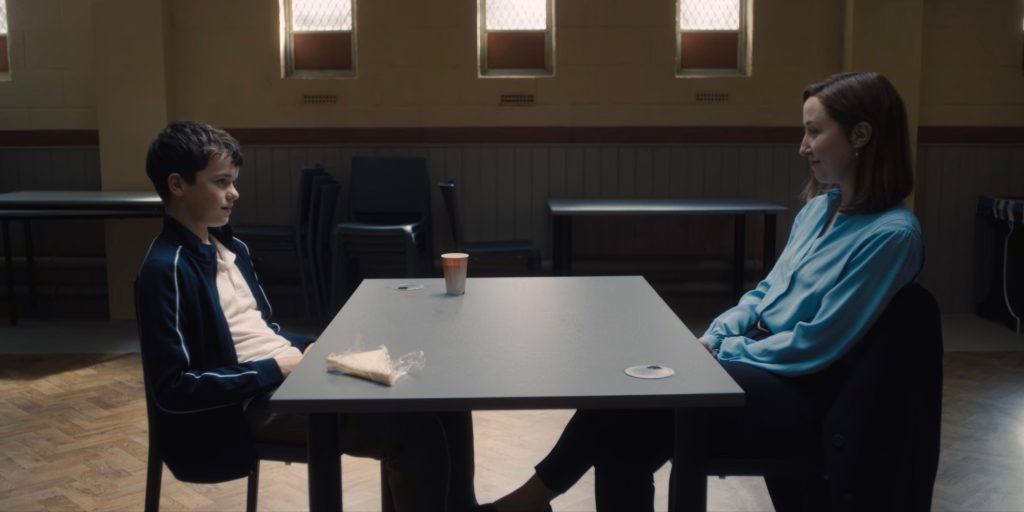
A simple act, Briony waves away an attendant coming to check on the two, “Signalling him away like the f****** Queen,” Jamie spits. It's this simple act which flips a switch in the boy, revealing a cold and menacing exterior, leagues away from the temper tantrums seen before.
Each episode, shot in one continuous take - in an incredible feat of skill and organisation - creates an immersive watch, where the undoubtedly long and rigorous shoot days allow the lines between character and actor to blur. Tensions bubble up and flow out into emotive and explosive scenes. Its fast-paced, real time, and raw. The clearing of throats, stammering, scratching and long drawn out breaths add to the realism and drama of the moment.
The final episode is perhaps the least exciting of the four, but for good reason. Though the preceding episodes are certainly compelling viewing, the series is not meant to sensationalise, therefore it’s fitting that the end is entirely focused on the harsh reality of daily life for those left in the aftermath. The final image is that of a father grieving the son he thought he had, and wondering where he went wrong.
The opening credits to each episode begin with images of the child cast in school photographs and home video style stills. Innocent smiling angels who will grow up to be someone outside of their parent’s control - all accept Katie.
The reality is that those children captured by their parent's lens are already being shaped by someone else. But who has more influence over a child than their parent? The media, and those personalities in it who perpetuate harmful narratives online, allowing them to grow and reach new heights through social media platforms.
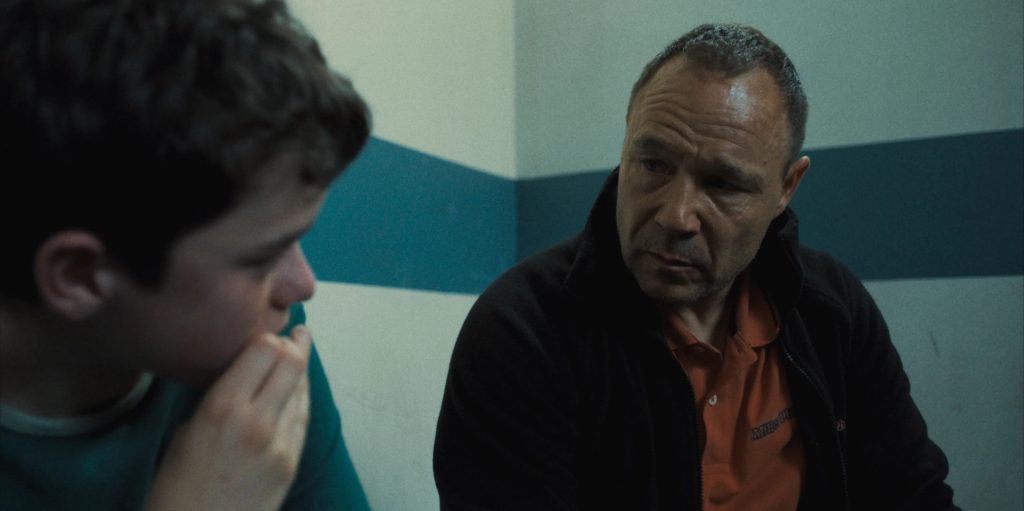
a boy who still sleeps amongst planets and stars with a teddy in his bed shouldn’t have access to the tools online that radicalised his mind.
“Manosphere”, “incel” and “Andrew Tate” are foreign concepts to most adults, but within secondary schools like Jamie’s it’s a fluent language amongst students.
They all share a shorthand and common understandings, among them that 80% of women are attracted to only 20% of men. Adam, DI Bascombe’s son, tries to help his father understand this and its bearing on the case.
Jamie desperately wanted to be liked. But this isn’t a sob story, rather a caution against what our new world is teaching our young men.
The detectives in need of an interpreter for this world are also us, the general viewer. The series is more than brilliant acting and ingenious filming techniques - it’s a commentary on our ignorance and a platform to raise awareness about the hidden epidemic we find ourselves in - because a boy who still sleeps amongst planets and stars with a teddy in his bed shouldn’t have access to the tools online that radicalised his mind.
Adolescence is going to make strides in educating and protecting Jamie’s generation, so long as we sit up and listen just as well as we’ve watched and streamed.