

On November 4th, Newcastle University hosted a talk by former BBC science editor David Shukman, discussing his new book The Response: A story of fire and flood in Britain's new world of extremes. Appointed the first science editor for BBC News in 2012, Shukman has travelled across the globe covering climate change but has never lost his optimism for the future and the ways in which the world can continue to work together to tackle climate change.
In an interview with Shukman, I asked him about climate anxiety and the effects it is having on young people worldwide. “I know so many young people who are upset,” Shukman said. “Warnings were ignored for so long, by earlier generations, leaving young people really facing the worst of it.”
"...young people and children were at particular risk of high mental health issues because of climate anxiety."
This comes on the back of last year with the 2025 climate change and mental health report recording that young people and children were at particular risk of high mental health issues because of climate anxiety.
However, Shukman has an optimistic idea for the future; he acknowledges the weight that climate change has on people but presents clear ideas for a way forward. “If we have a clear view of the situation… if we recognise the seriousness of what we face, that’s actually part of the way to claiming some agency.”
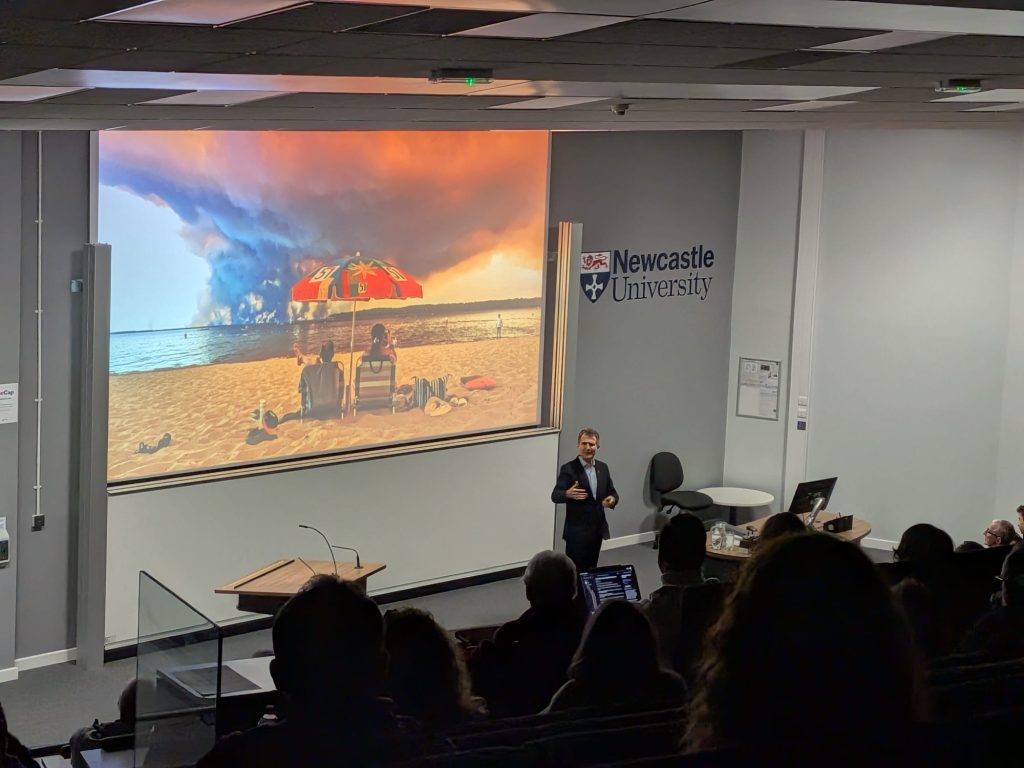
Shukman placed particular focus on the sense of community, “We all live next to people.” It is this idea that Shukman drew back to young people, university students in mind, “You might be in a student hall of residence, you might be in a house share, you might be living with your family.”
“You’ll have people around you,” Shukman stated.
“One of the things that I think creates a sense of empowerment is to look out for each other.”
Climate anxiety is a very real thing that weighs heavily on many, but Shukman argues that the way forward through this is to have a strong focus on how we can look after ourselves and each other, “One of the things that I think creates a sense of empowerment is to look out for each other.” Shukman also said of young people, “The fact that you’re awake to the realities and doing whatever you can in what might feel like minor ways, but if we all do them, they add up.”
We moved on to talking about the El Nino reaching its peak in the Pacific Ocean. I wanted to know how influenced this super El Nino is by man-made climate change and Shukman answered, “They are arriving now on an overheated planet.” Before going on to add, “They come along and raise temperature beyond the temperature that we have created.”
So what can we do about it? Shukman said, “Support the scientists who are able to tell us what the implications are.” Then he looped back around to his previous advice, “Look out for your neighbours, look out for yourself, look out for your household.”
Coming to the conclusion of the interview, Shukman told me, “Not to be scared into paralysis… we were blessed with brilliant scientists.” His concluding remarks to me were, “It may be only that I save one neighbour, or help two neighbours get through his crisis somehow, that is something to be proud of.”
So, Shukman placed a very strong focus on community and coming together to help tackle the growing climate crisis as a collective rather than an individual. He acknowledged the fears that many people, young people especially, hold about the climate and provided a way in which we can go forward into the future together.