

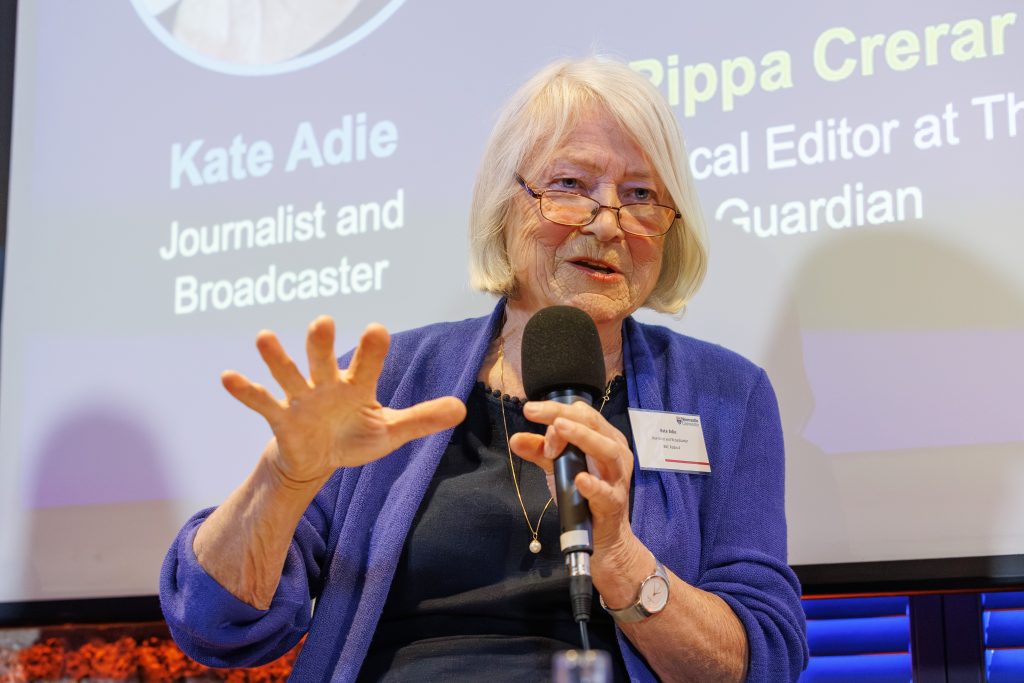
From the offset, the panel concurred that the role of the watchdog journalist is to scrutinise and hold power to account through accurate reporting that aims to serve the public above anything else. As journalists, we must be ‘astutely aware of who reads, who listens, who watches’, according to Kate Adie, a groundbreaking journalist and Newcastle University graduate who pioneered global conflict coverage on both Gulf Wars and the Iranian Embassy siege.
She reflected on how the industry has changed throughout her career, explaining that ‘it is still extremely difficult to find the truth, and the control is still in the hands of those with the greatest power’, even nowadays.
It poses the question: if the press is free, why are we still not getting fed the truth?
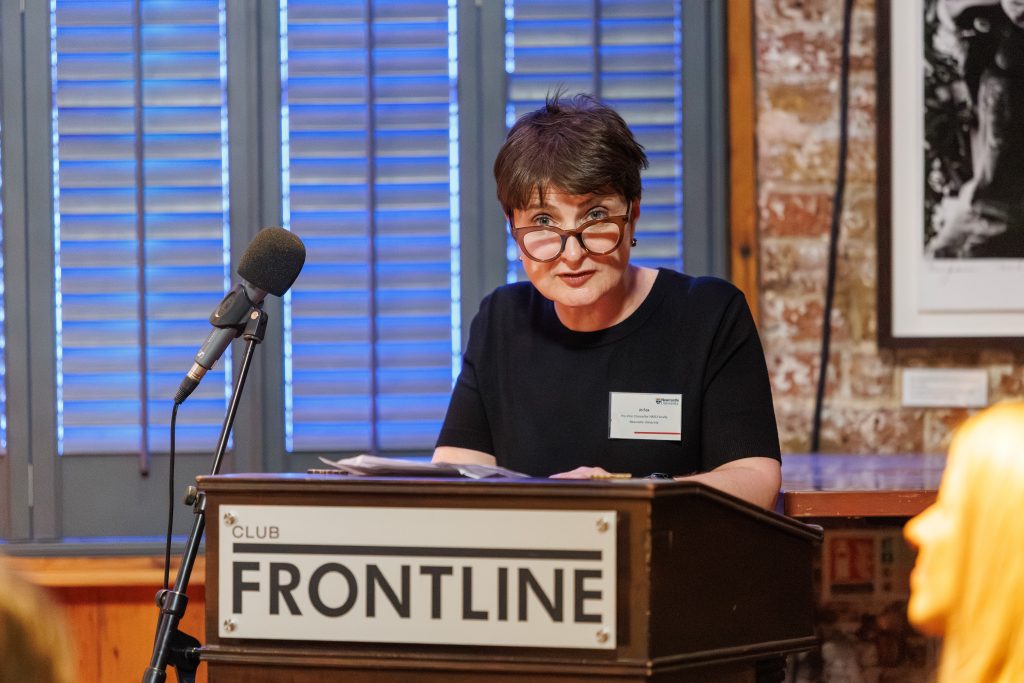
Jo Fox, Pro Vice Chancellor for Humanities and Social Sciences (HaSS), opened the discussion amongst the panel and audience by emphasising that “the conversation that follows is urgent. Please do engage. Please ask the hard questions.”
While the focus of the conversation on ‘power’ usually refers to political power, Ruth Sunderland, previous Group Business Editor for The Daily Mail and The Mail on Sunday reminds us how other forms of power feed into this narrative/dynamic.
She emphasised that ‘you can’t have the watchdog role for politicians without having the watchdog role for the business page, because business is becoming more politicised and the two are increasingly intertwined.’
Pippa Crerar, Political Editor for the Guardian, gave an example of this in the industry. Reporters Without Borders has reached its lowest point in 25 years, with over half the world’s countries having increasingly tough conditions for journalists. Pippa argued we’re starting to see the hostile political rhetoric in the US leak into UK politics and journalism.
Through working for a ‘progressive media organisation’, as Pippa herself describes it, she recounted an experience with Boris Johnson, stating that ‘he tried to clamp down on press freedom by banning journalists from particular organisations from coming to briefings’.
All four panelists reflected that in recent years, there has been a shift in the relationship between journalists and political figures, and as Kate puts it, ‘politics has become totally immersed in the journalism about it and surrounding it and is terrifically sensitive about it.’
The journalistic landscape is far more fragmented than it was a few years ago, and as a result, politics has become totally immersed in the journalism about it and surrounding it. Pippa touched on the consequences of this and how ‘political messaging can now come out beyond the prism of journalism and thus avoid the scrutiny we faced them with five or ten years ago’.
This is largely a cultural shift in relationships and attitudes between journalists and political figures, but it is largely spearheaded by the shift in news outlets and the rise of social media and digital journalism. She also touched on the political implications of the rise in AI and the influence of misinformation and deep fakes.
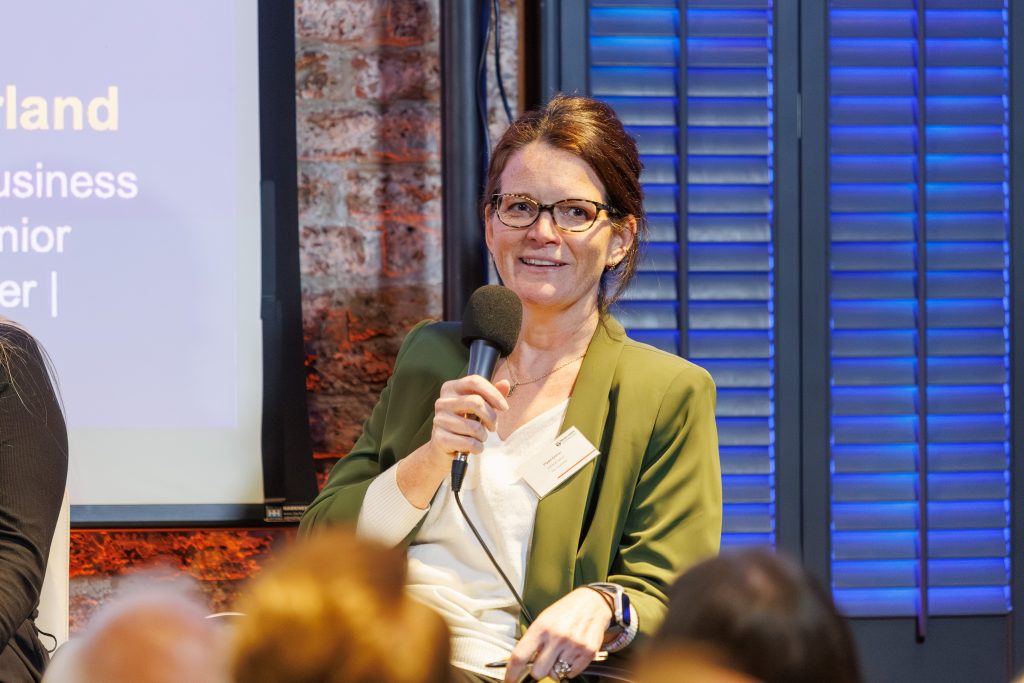
Kayleigh Fraser, News Reporter and Features Writer at North News, and previous Senior Reporter for The Northern Echo, acknowledged that the increased use of AI and introduction of AI-assisted reporters has made for quite a debate within the culture of journalism.
Interestingly, the younger journalists in the crowd were already familiar with the introduction of AI-assisted reporter roles, but some of the more experienced journalists in the room were hearing about it for the very first time.
Kayleigh placed emphasis on the need for young journalists to hone their skills and that the way to combat fears around the impact AI will have on entry-level positions is through education and perseverance.
Acknowledging the increased use of AI seen in student publications, Kate says ‘don’t feel insulted, it’s quite simple. Some people are lazy’.
Pippa wrapped up the debate by summarising everyone’s thoughts, “humans are the best communicators, AI can’t replicate that, and people should remember that.”
Members of the panel shared their experiences with starting out in journalism at The Courier, where Kayleigh held the role of Campus Comment Sub-Editor and Pippa wrote theatre reviews for the Arts section.
Kate spoke about The Courier fondly, recalling her many memories with the Editor in Chief at the time, about how student journalism ‘teaches you these great fundamentals and journalistic intuition, which are more difficult to hone when you get into a bigger publication.’
Pippa also emphasised that student publications ‘build a path to people’s media consumption over the rest of their lives. If they start with an organisation that they trust and that they feel reflects their interests, hopefully they’ll get the bug and carry on consuming news.’
All the panelists addressed the topic of community throughout, reminding the room that we hold those in power to account to serve our peers, a theme that continued throughout the evening and our discussion.
Ruth summarized the conversation perfectly, suggesting that ‘in a way, journalists are born as well as made.’ Our duties as journalists and watchdogs begin at a student level. Especially with how the landscape has shifted over the past few years, and the pressure to get it right is greater than ever before.
While journalists have always been responsible for holding power to account, and have always faced challenges in doing so, the panel provided us with insights into how we must act on these responsibilities. The ways in which we hold power to account has shifted, but the importance of doing has always remained the same.
As a final takeaway, Kate reminds us that “a watchdog must be able to bark loudly about everything, and not just quietly grunt.”