

What have you learned about yourself and the world from your time abroad?
Noelia: I've learned from my experience that as independent as I am, I do very much enjoy the comfort of good friends and, as interesting and mind blowing as it is to meet people from variety of places, walks of lives, and all of that, I think I do very much enjoy the comforts of my people.
Jenny: I think the biggest takeaway is that to live somewhere else, to speak a different language, to live abroad, makes you realise how little you know, and as soon as you realise that, it makes you understand how important language is. Almost at the same time. I know it's crazy! So you can sit there and speak Italian, and learn Italian on Duolingo as much as you like, but as soon as you know a language really well, and you've lived in that country, you know that you will never know that language well enough to be able to do all the things that you want to be able to do. When I used to come back from Spain, because I was so immersed in life over there, I used to find that I didn't really know where I was. I was always very aware when I was there of being English and different, and at that point, my Spanish was incredibly fluent. People used to say it was really difficult to to tell the difference, or to find my accent in my Spanish and so on. And I was so used to life there, but I was always aware that I wasn't Spanish. But then when I used to go home, because you've moved out of life, and you have to go back, and everybody else's life has carried on. It’s really hard, like I don't quite know where I fit. And my way of seeing things has changed, and my experience has changed, and my experience over there doesn't fit into my experience here. Yeah, I think that when you speak a language and you speak it really, really fluently, it's almost like you have a different identity in the language that you speak. So then trying to negotiate between those two identities, I think, is really difficult. I was in Spain for so long, but it's definitely a common feeling among language students.
When you speak a language and you speak it really, really fluently, it's almost like you have a different identity in the language that you speak.
Jenny Arnold
Laura: Beyond finding a good place to live, one of my biggest lessons was to push myself a little. If something excites you but also scares you, that’s usually a sign you should go for it. Don’t let fear or shyness stop you from having a unique experience or meeting someone new—you might end up with an unforgettable memory!
Loiana: Plan before you go—but plan to be wild! Haha, just kidding! Make sure to sort out your accommodation, finances, visas, and documents in advance. Have a solid plan, but leave plenty of room for spontaneity and adaptation. Plan and be flexible! Be open-minded, and don’t take things personally. Different cultures, different countries, different ways of doing things—that’s just how it is. Embrace the differences instead of resisting them! Immerse yourself in the language. Put yourself in situations where you’ll actually use it—classes, jobs, social events—whatever it takes! The more you speak, the more you’ll grow. Keep it real—don’t romanticise the experience too much. It’s just a trip, not a movie. Don’t create huge expectations that reality might not meet. Fear of judgement? Let it go. Chances are, you won’t see most of the people from your study-abroad "job" or "grammar class" ever again—so why worry about what they think? Allow yourself to make mistakes and learn. Honestly, this is a life lesson: stop letting judgement hold you back. The less you care, the happier you’ll be! Be independent. From your home friends, from your parents, from limiting opinions. Walk your own walk—it’s your journey, your experience. Own it. Respect the culture you’re in. Think of it as being a guest in someone’s home. Before opening the fridge and grabbing water, you'd ask first, right? Same logic applies here. And no, I’m obviously not just talking about water.
Jorge: Well, I think you guys, the British students, are more independent than the Spanish students. You know in general, because in Spain, we tend to live with our families. Going abroad and doing Erasmus is a really important moment, because you get more independent. So that was, for me, the main takeaway. Like I was more independent, I could live by myself. And I enjoyed that a lot. So the sense of being independent, resilient, all the things that we talked about and to conduct a life, you know, abroad, it was fantastic, because it's very empowering. I mean, if you can do this, you can do all sorts of things in the future, and you will do all sorts of things. So I think that sense of independence, empowerment, of satisfaction, of ‘I'm doing this despite all the hurdles’, I think that is great.
Nick: And we are unusual in that we're interested in that place. It's elsewhere. I always wanted to be somewhere else. I always had that kind of adventurous thing. I wanted to be somewhere. And I still love doing it now.
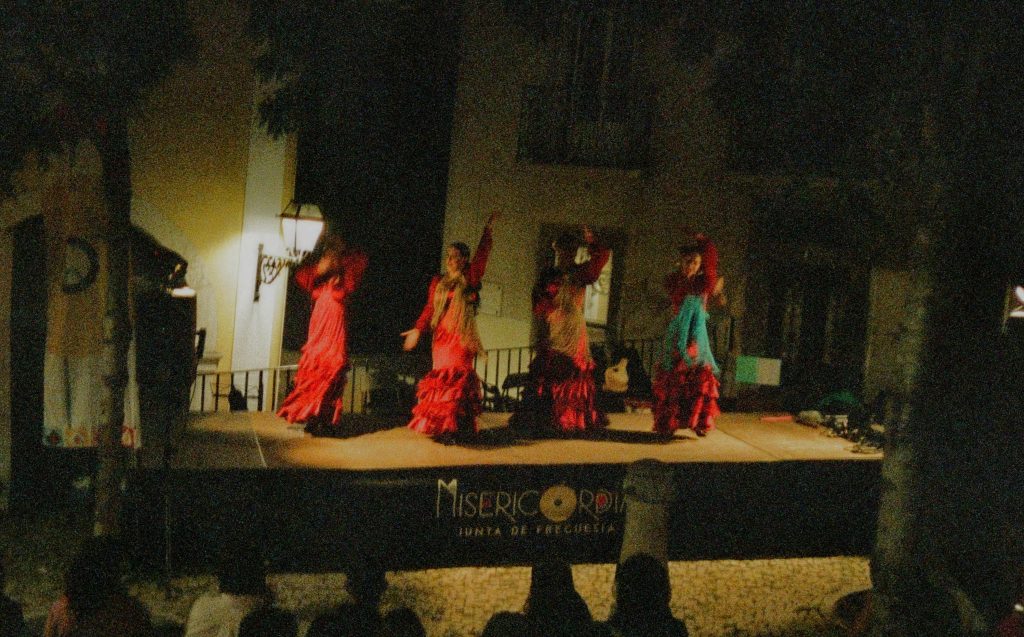
Did you pick up any habits or customs that you still keep today?
Jenny: I think I've probably lost them now. But I hate coffee from Costa. Oh, yeah, it's too big and too milky. That was my thing that I brought back from Spain is that I hate big coffees now. I just want a cup of coffee. I guess, being married to a Spanish man, there are lots of things that we have as a family that are Spanish. So definitely a lot of Spanish food, obviously, we try and do some of the Spanish traditions. But yeah, it's quite difficult to think about.
Nathalie: I think maybe things to do with timings of things that you do in the day. I'm thinking, it's food again, but lunchtime, you tend to have something maybe quicker, that's like a sandwich and some bits and stuff, and then have the nighttime meal, which is like the main meal of the day. It's maybe earlier compared to when you would eat in France - there are certain things you can retain. You don't have to change with certain things but I think it's sometimes easier to just take them on. And why not? I'd probably say this: just fitting in. Well, in France, we have such long breaks for lunch that you can you just have the three, four, course meal or whatever. Here you tend to have much shorter breaks, so it's easier.
Noelia: Yeah, that's a good question. I don't know, probably loads but they are so within me now that it's subconscious. Oh, here I lock the door. I never locked the door back home. And I’ve had been robbed a couple of times, so I've learned my lesson. Well, the door was locked anyway, but I think a lot more about security here than I do back home. I suppose Spain felt a lot safer. I'm also from a smaller place, and things have changed a lot in Spain as well. But like 10 years ago, I didn't have a lock on my bike in Spain or anything.
Laura: Definitely! That’s actually one of my favourite parts of living abroad—we become a blend of all the places we’ve experienced. For instance, I can’t live without a kettle now or a proper cup of tea, and I find myself saying “sorry” even when I bump into a shelf at the supermarket! These little things stay with you.
That’s actually one of my favourite parts of living abroad—we become a blend of all the places we’ve experienced.
Laura Arbonès Martínez
Loiana: I learned how to be more adaptable, open-minded, and accepting of diversity. Living as an immigrant, a non-white person, and a Brazilian abroad—whether in the US, Portugal, or the UK—made me more aware of global hierarchies and power dynamics. The experiences in the US and Portugal didn’t necessarily shape my daily routine, but they gave me a deeper understanding of social structures and made me more empathetic towards my own people by helping me see the systems that shape and often oppress them. Okay, that got a bit philosophical—I know. So, let’s talk about something more personal: my routine! Yoga and meditation are intrinsic to my daily life, but here’s a fun fact—I can only do them in English! I learned them in the UK, in English, and for some reason, I just can’t switch to Portuguese. It’s like my brain refuses.
Jorge: I mean, there are definitely a lot of things that we include from Spanish culture here in our day to day life in the UK. For instance, gastronomy, food, that's a really important element for us. We cook a lot of Spanish food, and that is very important for us, because it is the way we have been brought up. Food has a meaning, right? And those recipes that you learn from your mum and dad and all that stuff, they are really important as something that makes you belong, right? So definitely food is really important for us, and something we always treasure when we go back to Spain is tea. We love English tea. And you cannot find really proper good tea in Spain, which is awful. So we usually bring our own tea bags. Because when we are feeling under the weather or something like that, a good cup of tea is like a remedy - it works. So that's something we have learnt over here. And it's fantastic.
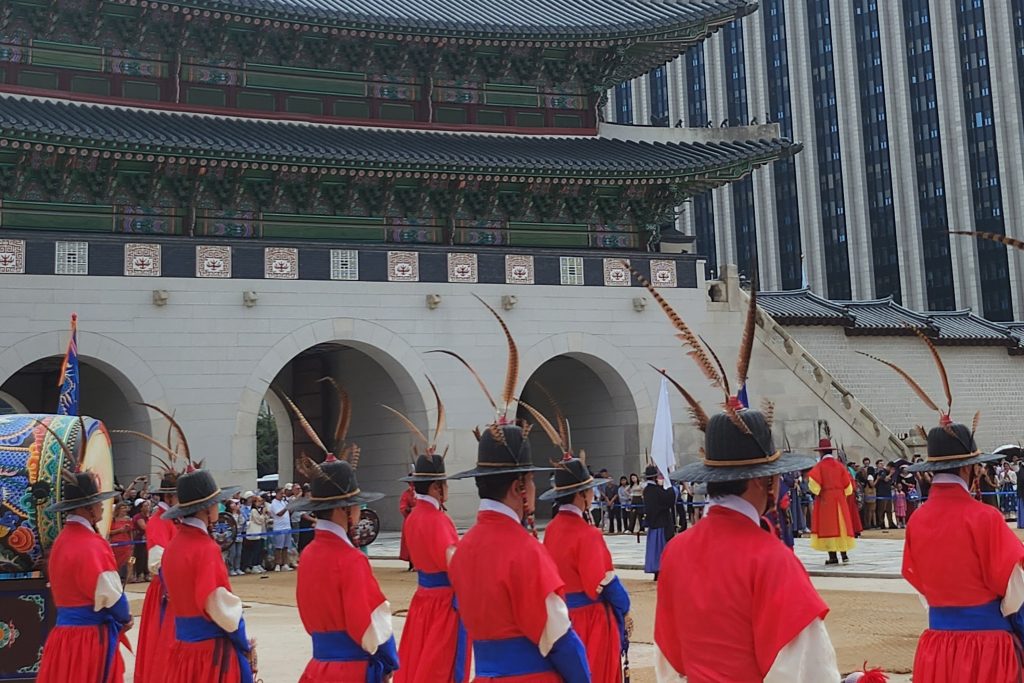
Embarrassing story?
Nathalie: This is England, so I was going to a football game and I was with this man who later became my husband, and his dad. I can't remember why, but I was looking for this dad, and we were in a working men's club in Sunderland. I just asked his friend, I say, Where's David? And he said, is he in that room? So I just went into that room. Well, that day, I had bought myself a goalkeeper top, because the goalkeeper was French at the time, and I loved him. I had a signed photo, and everything - it was stupid. And I walked into this room where I was told David was and people started cheering, and I thought, hey, look at me how popular I am. Because they all think I look like the goal keeper, and there's this raucous noise to me walking in. But I had totally misread the room. Saw David, went up to him and he was like, What are you doing in here? Get out. It's a men's only room, and they were actually telling me to get out. And I didn't know that was a thing. Like, somewhere in the pub there was a room where only the men. So when I walked in, all these people that I thought were like cheering me, were actually going, what you didn't hear woman get out of here. That's the 90s for you.
Nick: Colombia, social life, British bloke comes in, and the social life is entirely based on dancing, nothing but dancing, right? Not dancing when you're drunk, dancing before you're drunk. Can you imagine? Right? That's torture to begin with, until something you get, someone takes the time out to teach you the dance. And sometimes people will remind you that you're different, you know? And that's okay, yeah, because you are, you know what I mean.
Noelia: For most of the English words I've learned, there's a story, and I can actually remember the place where it happened, like the word plug. I remember we were in the cafeteria, like, imagine American setting, where all the basketballers, all the athletes, have sat together, and I'm just there trying to explain to my friend that I needed an adapter to plug my phone in, and I just couldn't say the word plug. I kept on saying plague. So you can imagine the whole of the cafeteria was laughing at my plug plague. For pretty much every word that I've learned, there's a story, but I never forget those words.
Jorge: Well, I remember feeling terribly, absolutely, terribly homesick when I was, I think, 1819, and I went back to the UK for a summer job at a hotel, yeah, in Warminster, Salisbury through a company. The deal was that the company would make all the money, and I would be paid nothing, really, just lodging and food. And I thought it was a great idea to do that, right? And there were really positive things about booking that, you know, the hotel and stuff. But I felt terribly homesick. And it was really small town. There was nothing else to do. Very small, very, very small. So I remember feeling really bad there and calling home in a sort of desperation. And I think my family understood that. I was embarrassed as well to tell them I was feeling that way because I had organised everything. But I learned that, you know, sometimes things don't go according to plan, so you have to reorient things and be positive, be right in your mind, yeah? And learn that maybe going to a very, very little town is not the best.
They are the little gems that make my life uniquely mine—the moments of pure idiocy followed by uncontrollable laughter, the sheer disbelief at surreal situations, the kind of chaos that only happens when you live abroad.
Loiana Leal
Laura: Oh, absolutely—so many! Most of them were language mix-ups, which can be incredibly awkward… but also hilarious. One that still makes me cringe (and laugh) happened at a pharmacy. I was trying to explain an issue with my foot, but the pharmacist somehow thought I was talking about my b**bs. To make things worse, she repeated the word loudly to confirm—right there in front of everyone! Mortifying in the moment, but honestly? Absolutely priceless in the hindsight. Embarrassing moments are part of the journey—they keep you humble, help you grow, and often become the stories you remember (and laugh about) the most.
Loiana: I have many stories like this. They are the little gems that make my life uniquely mine—the moments of pure idiocy followed by uncontrollable laughter, the sheer disbelief at surreal situations, the kind of chaos that only happens when you live abroad. Like the time I acted out how to pee in the middle of a restaurant in Lisbon. Yes. You read that right! There I was, trying to be a normal human, simply asking where the bathroom was. But fate (and the Portuguese language) had other plans. You see, in Brazil, "banheiro" means bathroom. In Portugal? "Casa de banho"—which literally translates to "house of bath." Now, let’s pause for a second... I didn’t want a house. I didn’t want a bath. I just wanted to pee. So when the waiter kept insisting I needed 'a casa de banho', my brain short-circuited. Was he suggesting I take a shower? Was I being bluntly told I smelled? Panic set in. There was only one way to make myself clear. So I did the only logical thing—I crouched into a squat, hands on my knees, and started making a delicate "shshshshshshsh" sound, mimicking the sacred act of urination itself. And then—silence... The waiter blinked. My friends held their breath. Then, with a smirk, he said, "Opa, Brasileira… ‘casa de banho’ means banheiro." At that moment, I wanted the ground to swallow me whole. More importantly, I wanted to murder my friends—the ones who knew this the entire time but deliberately let me humiliate myself for the sake of a good laugh. And that, my friends, is how I found myself lost in translation in my own language.