

Hailed as the ‘living fossils of the sea’, horseshoe crabs have been an essential part of marine ecosystems for 450 million years— predating the dinosaurs. Harmless to humans, they do not bite, have a weak claw grip, and like to munch on small clams and worms.
"...some conservationists estimate that up to 30% of bled crabs die after returning to the wild..."
Horseshoe crabs are harvested for their blood to assist in endoxin testing to ensure the safety of vaccines, medical equipment, and drugs. Bright blue and copper-based, their blood contains distinctive cells (Limulus Amebocyte Lysate, or LAL, to be exact) that are sensitive to toxic bacteria, and so when encountered, clots form around the microorganisms to protect the crab’s body.
The extracted, blood is processed and the particular substance at work within the cells—coagulogen— is burst and used to detect any threatening pathogens in liquids that will later come into contact with human blood.
You can see how horseshoe crabs are harvested here:
Once the process is finished, the crabs are released back into the sea. However some conservationists estimate that up to 30% of bled crabs die after returning to the wild, both from the stress of the bleeding process and the transportation back to their homes increasing their carbon dioxide production, which their gills can’t disperse properly.
They are overharvested in their hundreds of thousands on the Atlantic coast of the United States at only increasing numbers, harvests reaching 900,000 crabs in 2022 alone, and so a 30% mortality rate is detrimental— both to their own species, and other animals.
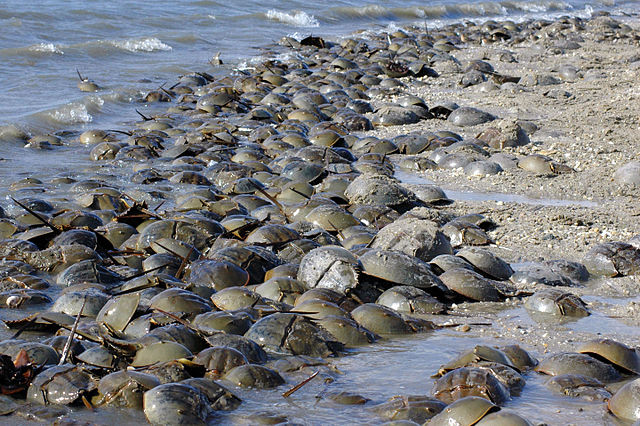
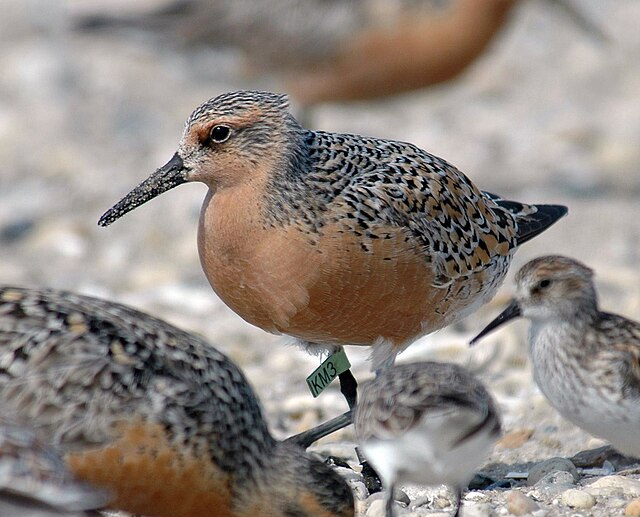
Delaware Bay has the highest population of horseshoe crabs in the world. Under springtime full moons, tens of thousands of the crabs emerge from the sea and mate, laying hundreds of thousands of protein and fat-packed eggs which migratory birds, such as Red Knots, rely on to fuel their long flights to the Arctic.
The overharvesting of the crabs means that Delaware Bay has seen an 80% decline in horseshoe crabs since 1990, leaving the Red Knots with nothing to eat, which has spring-boarded an 87% decline in their species since 2000.
"Eli Lilly, who focuses on manufacturing pharmaceuticals for therapeutic areas, successfully adopted the rFc technology in 2016..."
On top of the decline from overharvesting, horseshoe crab species are also killed rapidly in Asia for their blood and food, aswell as fishermen in the States taking 1.3 million of the crabs per year and killing half of them for bait.
But this doesn’t need to happen anymore. The need for horseshoe crab’s blood within the medical industry has decreased by 90% following a synthetic alternative entering the market in 2003– a clone called rFc, which mimics the Factor C, the clotting agent within LAL.
It uses recombinant DNA technology which makes it widely available and cost-effective, produces fewer false positives than harvested blood, and can be created in a controlled laboratory environment as opposed to the rapidly dwindling finite resource of horseshoe crab’s blood.
rFc faced regulation barriers within the pharmaceutical industry, namely due to the overall hesitance to introduce new technologies to a field that deals with life-threatening endotoxins, however some companies have adopted the new resource successfully.
Eli Lilly, who focuses on manufacturing pharmaceuticals for therapeutic areas, successfully adopted the rFc technology in 2016, quickly followed suit by other pharma giants such as Sanofi, Pfizer, and Roche.
But in May 2024, additional tests to the Bacterial Endotoxins Test using rFc- will come into effect, signifying a breakthrough in steering away from the harvest of horseshoe crabs. However, this proposal does not hinder companies from continuing to use LAL and harvests are still planned to go ahead this springtime.
Overcoming the challenge to ban horseshoe crab harvesting will require diligent research and regulatory approval to demonstrate the sustainability and reliability of rFc as opposed to the 50 year old process of relying on LAL, as well as needing increased awareness among individuals and stakeholders on using rFc has a consistent alternative— this challenge cannot be given up on.
Ultimately, horseshoe crabs have survived multiple mass-extinction events across their history on Earth, and their extinction is forecast to be at the hands of humans. It’s time to take the crabs out of the labs.