

Today, the Students’ Union is alive with conversation: students chatting in Luther’s, coffee cups refilling, and the rush to the Co-op for hot hash browns before they sell out. It’s a space that’s always welcoming, always full of life. But a century ago, the Union was a newly built structure divided by gender. This week, Newcastle University Students’ Union (NUSU) celebrates 100 years of its building, the only student-owned union building in the country. Speaking about the milestone, NUSU Chief Executive Lindsey Lockey reflected: “When we first got this building gifted to us 100 years ago, it was separated, men on the left, women on the right. To go from that to women leading it, that’s quite something.” Today, five of NUSU’s six sabbatical officers are women, a transformation which perfectly captures how far the Union has come.
"Today, five of NUSU's six sabbatical officers are women, a transformation which perfectly captures how far the Union has come."
Built in 1924, the Students’ Union building was designed by renowned Northeast architect Robert Burns Dick and funded by an anonymous donor, believed to have been Sir Cecil Cochrane, local politician and chairman of Armstrong College, the institution that would later become Newcastle University. At the time, there was no Newcastle University as we know it today; the city’s students were part of Durham University. The new Union was significant because it offered something rare for the era: a purpose-built space dedicated entirely to student life. It represented a belief that students deserved a place of their own: somewhere to meet, debate, and belong. Reflecting on the building’s evolution, Lindsey noted, “What’s fascinating is how much has changed, but also how much hasn’t.”
In 1949, still years before the official establishment of Newcastle University, the two separate unions, men’s and women’s, finally merged. This moment laid the foundations for a milestone in equality, as spaces that had once been strictly divided became shared. It marked the start of a more inclusive era for student life, where women were able to access the same rooms, opportunities, and leadership roles as their male counterparts, at a time where gender roles were still very rigid. In many ways, it shows how forward-thinking and progressive the university community already was, long before such changes became the norm elsewhere.
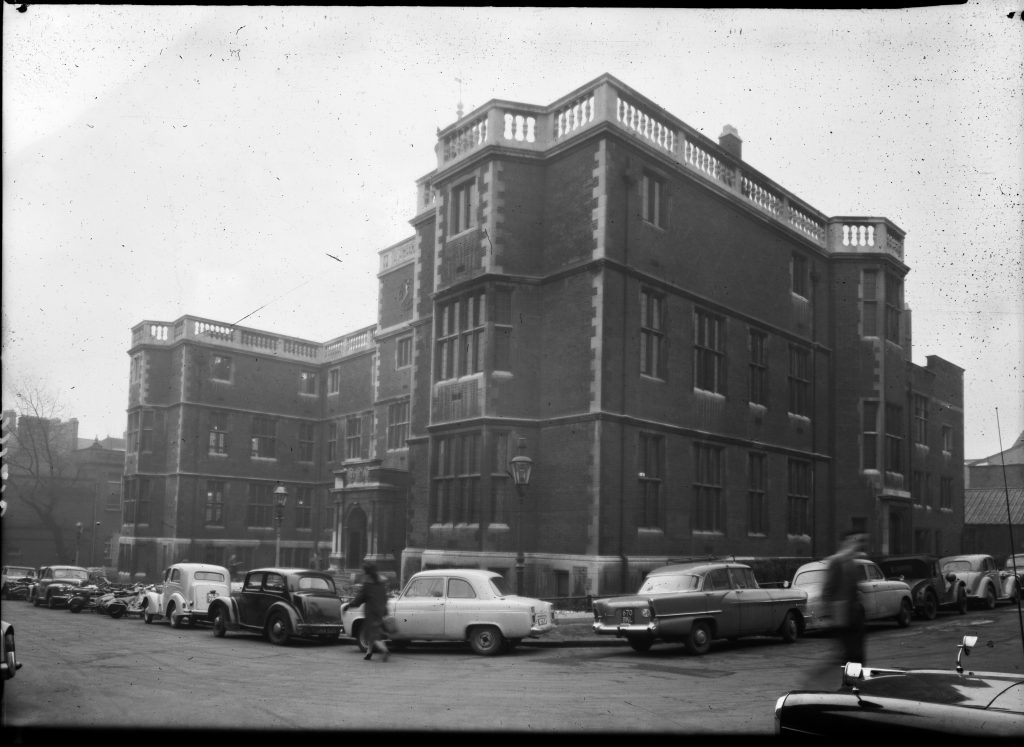
The political energy of the 1970s and 80s fuelled a surge in student activism and debate, specifically in the dedicated debate chamber within the building - however the space was demolished in 2003 and no longer exists. Its removal symbolised a broader shift in student culture, as the focus moved away from formal politics towards new ways of engaging and expressing student voices. Not all the Union’s ventures were quite so successful, however. In 1985, a ‘spa and fitness centre’ was opened inside the building, a well-intentioned but short-lived experiment that never quite caught on. Looking back, it’s easy to imagine today’s students loving the idea, but at the time it failed to make an impact and was ultimately closed. Just two years later, in 1987, the Union was declared a Grade II listed building. Its exterior, a testament to a century of architectural and cultural history, remains preserved, while the inside continues to evolve and adapt to modern student life.
That balance between preservation and progress was at the heart of the 2010 redevelopment, when the university invested £8 million to modernise the building. As Lindsey explains, “That shows how strong the partnership with the university is, and how valued students are here.” It’s a partnership that has not only kept the building alive but ensured it remains a space built around the needs and voices of students themselves.
Did you know that in the early 2000s, the Students’ Union was home to not one, but six bars? It’s hard to imagine now. Today, the Union has evolved from being purely social to something more holistic, with a stronger focus on wellbeing, inclusion, and community. Lindsey reflected on this shift: “The first thing everyone used to see when they came in was the Men’s Bar. Now, the first thing they see is the Support & Advice Hub. That says a lot about what’s changed!” The hub, she adds, is her favourite spot in the building. Student wellbeing has become an increasingly important issue, particularly in a post-Covid world and amid the cost-of-living crisis. Once again, the Union has adapted, continuing to evolve in ways that reflect the needs and priorities of its students.
"The first thing everyone used to see when they came in was the Men's Bar. Now, the first thing they see is the Support & Advice Hub. That says a lot about what's changed!"
Of course, one of everyone’s favourite spots in the Union is Luther’s. It was only in 2017 that the bar was renamed from the slightly outdated Men's Bar to Luther's, in honour of Martin Luther King Jr.’s honorary doctorate from Newcastle University. The change reflected NUSU’s values of inclusivity and its connection to the university’s rich history. After undergoing a major transformation in the summer of 2023 and emerging in franchise with Wetherspoons, Luther’s has only added to the building’s lively atmosphere. “Now it’s full of life and you’ll even see retirees who come in every day,” says Lindsey. “We still get alumni in their 60s, 70s, even 80s, coming in for tours. It stays with people.”
As NUSU celebrates a century of its iconic building, this week marks a moment of reflection and pride. The Centenary Exhibition in the building (just outside the Co-Op!) showcases a hundred years of student life, from the early segregated spaces to the modern, inclusive hub it has become, while alumni tours and displays bring stories from across generations back to campus.
Looking ahead, there’s even more change on the horizon. “We’ll be redeveloping in phases, with a real focus on societies and student media,” says Lindsey. Plans also include a new kitchen space designed to support student events and create more community-led opportunities.
A hundred years on, the Students’ Union remains a symbol of independence, belonging, and change, proof that while its walls may be historic, its spirit will always belong to the students. The same walls that once divided men and women now host wellbeing workshops, student media teams, and inclusive societies, acting a living reflection of how far the Union has come. As Lindsey put it, “the most beautiful building in the middle of campus is the students’ building, owned by students. That says a lot about what the university thinks of its students.”